You already know your toddler has more energy than you can keep up with. But did you know that all that running, jumping, and tumbling is actually building their brain, body, and social skills at the same time?
Playgroups for toddlers and structured gym classes do more than burn energy. They give your child a real head start on skills they will carry for the rest of their life. From learning to share with other kids to building balance and coordination, these early experiences shape who your child becomes.
Here is why they matter so much and how to get started.
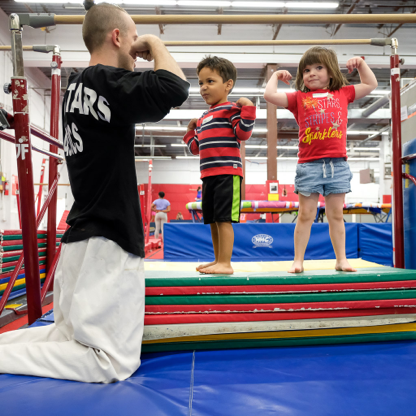
When toddlers play side by side, something amazing happens. They start learning how to interact with the world around them. Children's playgroups create a safe space where kids can practice sharing, taking turns, and expressing their feelings. These may sound like small things, but they are the building blocks of emotional intelligence.
At this age, your child is figuring out how everything works. Playing in a group teaches them that other kids have feelings too. They learn how to handle frustration when they don't get the toy they want. They learn to celebrate when a friend does something cool.
These are the exact social skills that help prepare kids for kindergarten and beyond. And the best part? Your toddler doesn't even realize they are learning. To them, it is just fun.
Read About: Benefits of Mommy & Me activities
Yes, and the benefits run deeper than you might expect. Structured gym classes build the physical skills your toddler needs at every stage of growth. Think balance, coordination, strength, and agility. These gross motor skills help your child walk confidently, climb safely, and move with control.
But it is not just about the big movements. Activities like rolling balls, gripping bars, and stacking soft blocks build fine motor skills and hand-eye coordination too. These are the same skills your child will need for writing, drawing, and feeding themselves as they grow.
Preschool gymnastics programs are designed around age-appropriate activities that meet your toddler exactly where they are. With small class sizes and trained coaches, your child gets the individual attention they need to grow at their own pace.
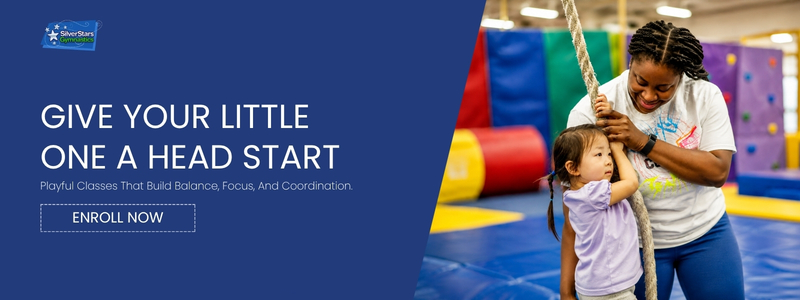
Here is something most parents don't realize. Physical play is brain play. When your toddler follows simple directions in a group setting, they are building cognitive skills like memory, focus, and problem-solving. Every time they learn a new movement or follow a sequence of steps, their brain is making new connections.
Playgroups for 2-year-olds are especially valuable because this is when children's brains develop at an incredible rate. Structured group activities introduce concepts like waiting for a turn, following a routine, and transitioning between activities. These may seem basic, but they lay the groundwork for learning in school.
In short, the gym mat is one of the best classrooms your toddler will ever have.
Read About: Benefits of Baby Exercise Classes
If your child is under three, you will likely be right there in class with them. And that is actually a wonderful thing. Parent-child classes give you a front-row seat to your toddler's development. You get to see what they are working on, learn how to support their milestones at home, and bond with them through movement and play.
Infant playgroups and parent-child gym classes also connect you with other families going through the same stage. That community matters. You can swap tips, share experiences, and feel a little less alone in the beautiful chaos of raising a toddler.
Curious about what a first-class experience looks like? This toddler gymnastics guide walks you through what to expect so you and your little one can show up feeling confident.
Sooner than you might think. Many children's playgroups and gym programs welcome babies as young as six months, with a parent or caregiver right alongside them. These early classes focus on sensory exploration, gentle movement, and building comfort in a new environment.
By the time your child turns two, they are ready for more structured playgroups for 2-year-olds that introduce group routines, basic gymnastics movements, and peer interaction. And for the littlest ones, free monthly events like Storytime + Open Gym offer a no-pressure way to explore movement in a fun, welcoming setting.
During the school year, Open Gym is another great option for kids 8 and under. Parents stay and supervise while their child explores trampolines, play mats, and more in a relaxed, judgment-free environment.
The first trial class is free for new families and can be scheduled at any time. No pressure, no commitment.
Once your child falls in love with movement and group play, you will want to keep that momentum going. Gymnastics camps are a great way to keep kids active during school breaks. Open to children ages 4 and up, camps are packed with gymnastics, creative activities, and ninja challenges that keep kids engaged all day long.
Looking for a fun evening out for your child and a well-deserved break for you? Kids' Night Out offers supervised evening fun with open gym play, games, and movies. It is a parent favorite for good reason.
These experiences build on the skills your child develops in weekly classes and give them even more chances to grow, make friends, and try new things.
Every jump, tumble, and high-five in a toddler playgroup or gym class is building something bigger. Your child is growing stronger, thinking sharper, and learning how to connect with the world around them. The earlier you start, the more time they have to build the confidence and skills that will carry them through childhood and beyond.
Your child is a star. Let them shine. Join us today and discover programs built to help every child thrive.
Q. What age should my toddler start playgroups or gym classes?
Many programs welcome babies as young as six months in parent-child formats. By age two, children are ready for more structured playgroups that introduce group routines, basic movement skills, and peer interaction.
Q. Are playgroups for 2-year-olds really worth it?
Yes. Two-year-olds are at a critical stage of brain development. Structured playgroups help them build social skills, motor coordination, and confidence through age-appropriate activities they actually enjoy.
Q. Do parents stay during toddler gym classes?
For children under three, most programs use a parent-child format where caregivers participate alongside their toddler. This supports bonding and helps parents learn how to encourage development at home.
Q. How are children's playgroups different from regular playdates?
Playgroups offer structured, age-appropriate activities led by trained professionals in a safe environment. Unlike casual playdates, they are designed to build specific physical, social, and cognitive skills through guided play.
Explore a variety of fun and skill-building programs at Silver Star Gymnastics, from gymnastics and dance to camps and recreational activities designed for kids of all ages.