When most people hear "gymnastics," they picture flips on a balance beam or a perfect vault landing at the Olympics. But gymnastics is much bigger than that. There are actually five different types of gymnastics, and each one looks and feels completely different.
If you are a parent exploring children's gymnastics for the first time, knowing the categories of gymnastics can help you figure out which one fits your child best. Some types focus on strength and power. Others highlight grace, teamwork, or high-flying acrobatics.
Let's break them all down in plain language so you can feel confident about what is out there.
Artistic gymnastics is the one most people recognize. It is the discipline you see at the Olympics, and it is also the most common type offered in children's gymnastics programs across the country.
Girls compete on four events: vault, uneven bars, balance beam, and floor exercise. Boys compete on six: floor exercise, pommel horse, still rings, vault, parallel bars, and high bar.
What makes artistic gymnastics so valuable for kids? It builds strength, flexibility, coordination, and balance all at the same time. Your child also learns discipline, goal-setting, and how to push through challenges. These are skills that carry over into school, other sports, and everyday life.
For children in the Silver Spring area, artistic gymnastics classes offer a clear path from beginner to advanced levels, with small class sizes and age-appropriate coaching that meets each child where they are.
Rhythmic gymnastics blends dance, ballet, and gymnastics into one beautiful discipline. Athletes perform choreographed floor routines to music while using handheld equipment like ribbons, hoops, balls, clubs, and ropes.
This type of gymnastics focuses on flexibility, grace, rhythm, and hand-eye coordination. It is a great fit for kids who love music and creative expression. Rhythmic gymnastics helps children develop body awareness and artistic confidence in a way that other gymnastics types may not.
While rhythmic gymnastics is less commonly offered at the recreational level, the flexibility and coordination skills it builds are woven into many quality children's gymnastics programs.
Check about: Gymnastics Developmental Levels
Trampoline gymnastics is exactly what it sounds like, and kids love it. Athletes bounce on a specialized trampoline and perform flips, twists, and somersaults in the air. Competitions include individual events, synchronized events, and double-mini trampoline.
This discipline builds incredible core strength, spatial awareness, and body control. Your child learns how to manage their body in the air, which improves confidence and coordination on the ground too.
Trampoline training is often paired with tumbling (more on that next), and many programs offer combined classes. Tumbling and trampoline classes are a popular choice for kids who want a high-energy, exciting way to build gymnastics skills without the full apparatus commitment.
Acrobatic gymnastics, often called "Acro," is the most team-focused of all the gymnastics types. Athletes perform in pairs or groups and rely on each other for lifts, throws, catches, and human pyramids.
There is no traditional equipment involved. Instead, the gymnasts themselves become the equipment. This builds deep trust, communication, and cooperation between partners.
Acro is a wonderful option for kids who thrive in team settings. It develops strength, flexibility, and balance while also teaching children how to work closely with others toward a shared goal. Even outside of formal Acro programs, the teamwork and partner skills it promotes show up in many well-rounded children's gymnastics classes.
Read: USAG Gymnastics Levels Guide
Tumbling is one of the most exciting categories of gymnastics to watch. Athletes sprint down a long, spring-loaded runway and launch into a rapid series of flips, somersaults, and twists before sticking a clean landing.
Think of it as the power side of floor exercise, but faster and with more explosive energy. Tumbling demands strong legs, speed, and sharp spatial awareness.
For kids, tumbling classes build confidence and athleticism quickly. The skills children learn in tumbling transfer directly to other types of gymnastics and to sports like cheerleading, diving, and martial arts. It is one of the best foundations you can give a young athlete.
With five different types of gymnastics to choose from, you might wonder where to start. The good news is that most children's gymnastics programs introduce foundational skills that apply across all categories of gymnastics.
For the youngest children (ages 6 months to 5 years), preschool gymnastics is the perfect entry point. These classes build basic motor skills, confidence, and comfort in a group setting through age-appropriate play and movement.
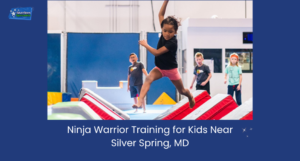
As kids grow, they can explore different paths based on their interests. Some children gravitate toward the strength and structure of artistic gymnastics. Others light up during tumbling and trampoline work. And for kids who love high-energy, obstacle-style challenges, ninja and fitness classes offer a fun blend of gymnastics, martial arts, and agility training.
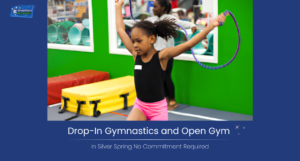
If your child is curious but not ready to commit to a weekly class, Open Gym is a great way to let them explore. Available during the school year for kids 8 and under, it is a relaxed, drop-in play time where parents stay and supervise while their child tries out trampolines, play mats, and more.
The first trial class is free for new families and can be scheduled at any time. No pressure. No commitment.
Every type of gymnastics teaches kids something valuable. Strength, balance, coordination, confidence, teamwork, and discipline are all built into these different types of gymnastics. The earlier your child begins, the more time they have to discover what they love and build skills that last a lifetime.
Your child is a star. Join us today and find the program that helps them shine.
Q. What are the 5 main types of gymnastics?
The five main types are artistic, rhythmic, trampoline, acrobatic, and tumbling. Each discipline focuses on different skills, from strength and flexibility to teamwork and rhythm.
Q. At what age can a child start gymnastics?
Many programs welcome children as young as six months in parent-child classes. By ages 3 to 5, kids can begin independent preschool gymnastics that builds coordination, balance, and social skills.
Q. Is tumbling the same as gymnastics?
Tumbling is one of the five categories of gymnastics. It focuses specifically on floor-based flips, somersaults, and twists performed on a spring-loaded runway, rather than on multiple apparatus.
Q. How do I know which gymnastics type fits my child?
Start with a general recreational class and let your child explore. Over time, their interests and strengths will naturally guide you toward the right discipline.
Explore a variety of fun and skill-building programs at Silver Star Gymnastics, from gymnastics and dance to camps and recreational activities designed for kids of all ages.