Few things are more exciting than watching your baby figure out how to move on their own. That first scoot, roll, or belly slide is a huge milestone. And if you are wondering how to teach a baby to crawl, you are not alone. Most parents want to know what they can do to support this stage.
The good news? You don't need fancy tools or special equipment. A little floor time, some patience, and a few smart strategies can make a big difference.
Most babies begin crawling somewhere between 7 and 12 months, with many taking their first steps toward crawling around 8 months. But every baby has their own timeline. Some start scooting at 6 months. Others wait closer to their first birthday.
And here is something that surprises a lot of parents. About 7% of babies skip crawling altogether and go straight to walking. So if your baby hasn't started yet, don't panic. They may just be working on other skills that interest them more, like using their hands to grab and explore objects.
What matters most is that your baby is making progress in using their body to move and interact with the world around them.
Crawling doesn't happen overnight. Your baby builds up to it by mastering a series of smaller skills first. As your baby is learning to crawl, they need to develop head control, the ability to roll over from front to back and back to front, sitting up without support, and bearing weight on their arms and legs.
Each of these skills strengthens the muscles your baby will use to push up, balance, and move forward. You might even notice your baby rocking back and forth on their hands and knees for weeks before they take off. That rocking is real practice. They are building strength and figuring out coordination.
Read About: How to teach Baby to Sit Up
If you are wondering how to help your baby crawl, the best place to start is the floor. Tummy time is your biggest tool here. You can begin from birth, starting with just a few seconds and gradually increasing as your baby gets stronger. Tummy time builds the head, neck, back, and arm muscles your baby needs to push up and eventually crawl.
Getting down on the floor with your baby makes a big difference too. When you are at their level, they are more motivated to move toward you. This is one of the most natural ways to encourage crawling in infants without adding any pressure.
Place a favorite toy or colorful object just a few inches beyond your baby's reach. This gives them a reason to stretch, shift their weight, and start figuring out forward movement. Let them go barefoot whenever possible so they get better grip and stronger foot muscles.
One thing to skip? Baby walkers. They don't help babies learn to crawl, and they can actually delay motor development and cause injuries. Your baby learns best through free movement on a safe, firm surface.
Yes. And this is something many parents don't realize. There is no single "right" way to crawl. Some babies do the classic hands-and-knees crawl. Others prefer to commando crawl on their bellies, scoot on their bottoms, or roll across the room.
Some babies even crawl backward before they figure out how to go forward. It can be frustrating for them (and entertaining for you), but it is completely normal.
As long as your baby is making progress in moving their body, the style does not matter. Talk to your pediatrician if you notice your baby using only one side of their body to crawl or if they are not making any forward progress in movement by 12 months.
Read About: How to teach your baby to roll over
Understanding how to teach an infant to crawl goes beyond physical movement. Crawling plays a real role in brain development too. When your baby moves independently, they explore their environment in a way that builds cognitive skills like problem-solving, spatial awareness, and cause and effect.
A study on crawling and infant development found that 92% of pediatric physical therapists view crawling as important and connected to positive developmental outcomes. And research on how early mobility supports brain growth shows that babies who actively explore their surroundings develop cognitive skills more effectively.
Every scoot across the living room is a learning experience. Your baby isn't just getting from point A to point B. They are figuring out how the world works.
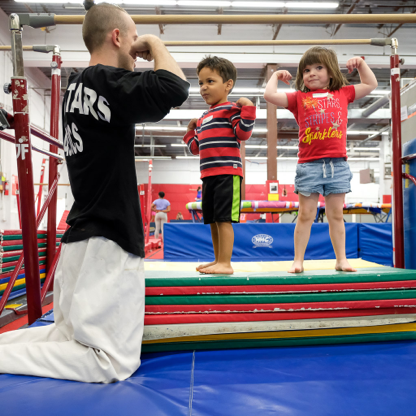
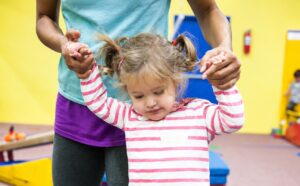
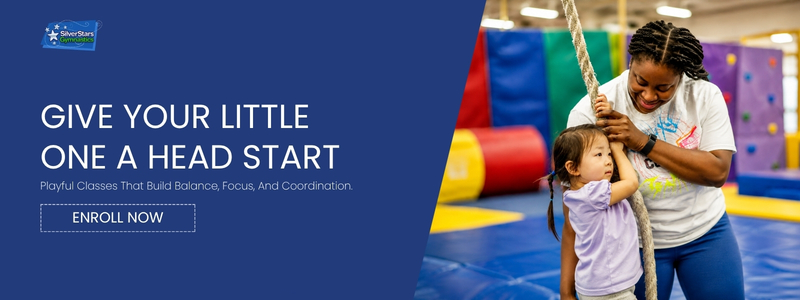
If you want to give your baby extra support during this stage, parent-child movement classes can be a wonderful option. Preschool gymnastics programs offer safe, age-appropriate environments where babies and toddlers build strength, coordination, and confidence right alongside their parents.
These classes welcome children as young as 6 months. With small class sizes, trained coaches guide activities that support the exact motor skills your baby is working on, from pushing up and reaching to balancing and moving through space.
Read About: How to Teach a Baby to Walk
Crawling is one of the most exciting milestones in your baby's first year. Every bit of tummy time, every reach for a toy, and every wobbly rock on hands and knees is building something real. Your baby is growing stronger, getting smarter, and learning to explore the world on their own terms.
The best thing you can do is give them the time, the space, and the encouragement to figure it out. Your child is a star. Join us today and discover programs designed to support every stage of your baby's growth.
You can begin supporting crawling skills from birth through regular tummy time. Most babies start showing signs of crawling between 7 and 12 months, but every child develops at their own pace.
Give your baby plenty of floor time on a safe, firm surface. Place toys just out of reach to motivate movement, get down on the floor with them, and let them go barefoot for better grip and muscle development.
Not at all. Many babies crawl backward before they learn to move forward. It is a normal part of figuring out coordination and building the strength they need to go in any direction.
No. Baby walkers do not support crawling development and can actually delay motor skills. Free movement on a safe floor is the most effective way for your baby to build the strength and coordination they need.
Explore a variety of fun and skill-building programs at Silver Star Gymnastics, from gymnastics and dance to camps and recreational activities designed for kids of all ages.