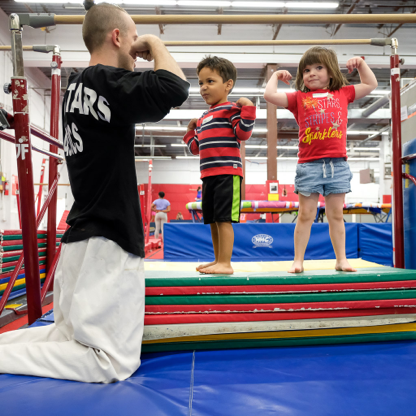

If your child loves gymnastics, a floor bar is one of the best training tools you can build at home. It is simple, affordable, and perfect for practicing everything from basic holds to handstands.
But here is the problem most parents run into. A standard PVC pipe bends under your child's weight. That flex makes it hard to practice properly and can feel unsafe.
The good news? There is a simple fix. By sliding a wooden dowel rod inside the PVC pipe, you create a gymnastics floor bar that stays firm and straight. This guide shows you exactly how to make a floor bar that holds up to real practice.
A gymnastics floor bar is a low, ground-level bar that mimics the feel of a real bar at the gym. It stays flat on the floor at all times and gives kids a safe place to practice grips, holds, and body positions right at home.
Think of it as a bridge between what your child learns in class and the practice they want to squeeze in between lessons. Floor bar gymnastics drills are used at every level, from preschool beginners to competitive athletes. Coaches love them because they let kids focus on form and strength without the challenge of height.
And the best part? You can build one in under an hour.
The materials are easy to find at any hardware store. Here is your full shopping list.
Everything on this list is inexpensive and widely available. Most parents spend under $30 for all materials.
Once you have your materials, the build is straightforward. Follow these five steps and you will have a sturdy floor bar in no time.
Slide the wooden dowel rod all the way inside the PVC pipe. This is the key step that prevents bending. The dowel gives the bar solid internal support so it stays straight under your child's weight.
Place one piece of 4x4 wood under each end of the PVC pipe. These blocks serve as the base and keep the bar stable on the ground.
Apply PVC glue to one galvanized clip hanger. Center it on top of one 4x4 block and secure it with two 1 1/4 inch pocket hole screws, one on each side of the clip. Repeat this on the other end.
Using the 2 1/2 inch screws, drill through the PVC pipe and dowel rod down into the 4x4 block. Place this screw just outside the galvanized clip area. Repeat on the other end.
Test it out. Give the bar a firm press to make sure everything is solid. Then let your child try it.
That is it. Five steps and you are done.
Here's how those levels typically build on each other: Bar Skill Progressions
This is where it gets fun. A floor bar opens up a huge range of drills depending on your child's skill level.
See how this bar work carries over to the floor: Tumbling Skills That Build on Bar Strength
Safety always comes first. Follow these rules every time your child uses the bar.
Keep the bar on the floor at all times. Never elevate it on blocks, chairs, or any other surface. Floor bars are not built for height, and raising them creates a serious safety risk.
Always supervise your child while they practice. Even on a low bar, kids can lose their balance or try moves they are not ready for. Stay close and stay attentive.
Place the bar on a soft surface when possible. A carpeted area, grass, or a folded blanket underneath can help cushion small slips.
Check the bar before each use. Make sure the screws are tight, the clips are secure, and the PVC pipe is not cracked. A quick 30-second inspection goes a long way.
For a full breakdown of handstand progressions on the bar, see: Handstand Drills Using a Floor Bar
Knowing how to make a floor bar gives your child a great way to build skills at home. But a floor bar works best when paired with real coaching that teaches proper technique, form, and progressions.
Your child builds muscle memory at home, then refines their skills in class with trained coaches who know exactly where to push and where to pull back.
That combination is what helps young gymnasts grow with confidence and safety. If you are looking for a place where your child can build these skills with expert support, Silver Stars Gymnastics offers programs for every age and level. The first trial class is free for new families and can be scheduled at any time.
How much does it cost to make a floor bar at home?
Most parents spend under $30 on all the materials. Everything is available at a standard hardware store, and the build takes less than an hour.
Why does my PVC floor bar bend?
PVC pipe is lightweight and flexible by design. When a child puts weight on it, the pipe bows in the middle. Adding a wooden dowel rod inside provides internal support and prevents bending.
Can a young child use a floor bar?
Yes, with close supervision. Younger children can practice simple drills like bear crawls and horsie kicks. The low height makes it safe and accessible for beginners who are just starting to build coordination and strength.
Is a floor bar the same as a real gymnastics bar?
No. A floor bar stays on the ground and is built for practicing holds, body positions, and basic technique. It is not designed for swinging, kipping, or weight-bearing skills that are performed on elevated equipment.
How long will a homemade floor bar last?
A well-built floor bar with the dowel support can last for years. Check the screws and clips regularly, and store it indoors when not in use to protect the wood and PVC from weather damage.