Your kid just did a somersault off the couch, stuck the landing on a pile of laundry, and looked at you like they deserved a gold medal.
Sound familiar?
That energy is not a problem. It is actually a sign that your child's body is ready for more movement, more challenge, and more ways to explore what it can do. The trick is giving them a safe place to do it.
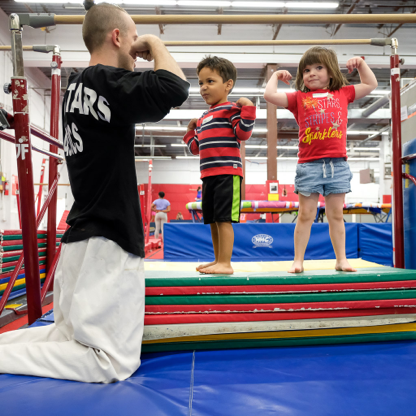
That is exactly what recreational tumbling classes for kids are designed for. They take all that wild, couch-flipping energy and channel it into real skills that help your child grow stronger, more confident, and more coordinated. And unlike competitive gymnastics, recreational tumbling keeps things fun, low-pressure, and open to every skill level.
Here are seven ways tumbling classes help your child's overall development.
Tumbling is a full-body workout disguised as play. When kids practice cartwheels, rolls, and handstands, they use their arms, legs, core, and back all at once. Over time, they develop functional strength that helps them in every other physical activity they try.
This is not the kind of strength that comes from sitting on a machine. It comes from learning how to support and move their own body weight, which is exactly what growing kids need.
Here is something most parents do not think about. One of the most valuable things tumbling teaches your child is how to fall.
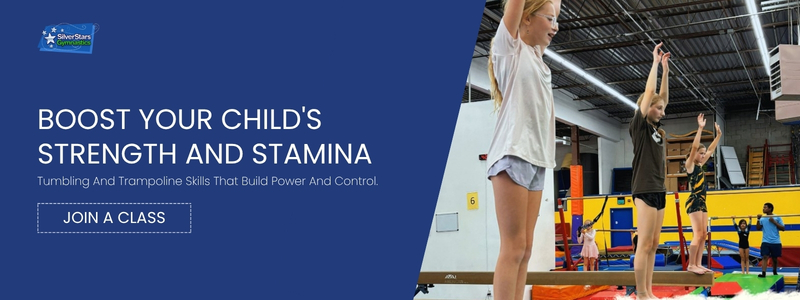
Kids fall constantly. At playgrounds, on bikes, during sports, and yes, off the couch. Tumbling and trampoline classes teach kids body awareness and spatial control, so when they do fall, they know how to tuck, roll, and protect themselves. That skill reduces the risk of injury in everyday life, not just in the gym.
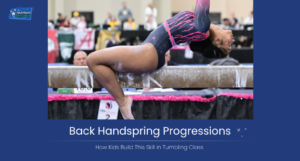
Tumbling requires kids to control their bodies through complex movements. A forward roll looks simple, but it demands coordination between the arms, legs, head position, and momentum. A cartwheel adds balance and timing on top of that.
With regular practice, kids develop sharper motor skills that carry over into other sports and activities. If your child plays soccer, does martial arts, or is interested in cheerleading or dance, tumbling gives them a stronger physical foundation to build on.
Competitive sports can be intense for young kids. Not every child thrives under the stress of rankings, team tryouts, and performance pressure.
Recreational tumbling classes for kids flip that script. The focus is on personal progress, not competition. When a child masters a new skill, whether it is their first backward roll or a clean bridge kickover, they earn that sense of accomplishment on their own terms. That kind of confidence sticks with them long after they leave the gym. It shows up in the classroom, on the playground, and in how they handle new challenges.
Tumbling is not just physical. It is surprisingly mental. Kids have to listen to their coach, remember a sequence of movements, and stay focused long enough to execute each step.
For children who struggle with attention or sitting still (which is most of them at certain ages), tumbling gives their brain something active and engaging to lock onto. Parents often notice that their child becomes a better listener and more disciplined over time, not because anyone forced it, but because the activity itself requires it.
Group tumbling classes put kids in a room with peers who are working toward similar goals. They cheer each other on, wait their turn, and learn how to share space and equipment. These are the same social skills they need at school and in life.
Unlike screen time or solo play, tumbling classes give kids face-to-face interaction in a structured, positive setting. Many children form genuine friendships in class that extend well beyond the gym.
Kids who move regularly are more likely to keep moving as they grow up. Tumbling introduces your child to the habit of physical activity in a way that feels fun, not forced. It builds a positive relationship with exercise early on, which is one of the best gifts you can give them.
This is the number one question parents ask, and it deserves a straight answer.
Yes. Recreational tumbling, taught by trained coaches in a properly equipped facility, is one of the safer activities for kids. Padded floors, age-appropriate progressions, and small class sizes all work together to minimize risk.
Your child does not need to be naturally flexible or athletic to start. That is actually the point. Recreational classes meet kids exactly where they are and help them grow from there.
If you are looking for recreational tumbling classes for kids near me in Silver Spring, Silver Stars Gymnastics has offered tumbling and trampoline (TNT) classes for over 32 years. Their TNT program covers ages 3 through 17, with classes grouped by age and ability so your child trains with kids at a similar stage.
Classes run once a week, enrollment is monthly and ongoing (so you can start any time), and the first trial class is completely free for new families. The facility is just minutes from the DC border area off East-West Hwy, making it easy to reach from Bethesda, Takoma Park, Chevy Chase, and Washington, DC.
For kids' tumbling classes in Silver Spring, MD, you can visit gosilverstars.com or call 301-589-0938 to schedule your free trial.
Join us today and give your child a fun, safe place to flip, tumble, and grow.
Q: At what age can my child start recreational tumbling classes?
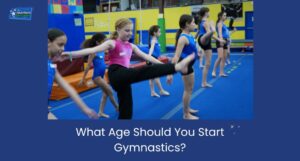
Most programs accept kids as young as 3 years old. Classes are grouped by age and skill level, so even the youngest beginners train in an environment designed specifically for them.
Q: Do kids need gymnastics experience before starting tumbling?
Not at all. Recreational tumbling classes for kids are built for beginners. Your child will learn foundational skills from the ground up in a supportive, low-pressure setting.
Q: How is recreational tumbling different from competitive gymnastics?
Recreational tumbling focuses on personal progress, fun, and fitness. There are no competitions, rankings, or high-hour training commitments. Kids attend once a week and move at their own pace. “ eventually a student could move into the competitive tumbling &trampoline team
Q: Will tumbling help my child in other sports?
Yes. Tumbling builds core strength, balance, flexibility, and coordination that transfer directly to sports like soccer, martial arts, cheerleading, and dance.
Q: How do I know if a tumbling class is safe for my child?
Look for facilities with padded floors, trained coaches, small class sizes, and age-grouped instruction. A free trial class is a great way to see the environment before committing.