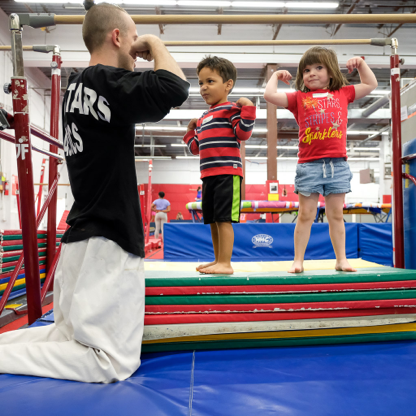

Your child has been practicing for weeks. They have worked on their routines, perfected their landings, and counted down the days. Now the big day is here, and you might be just as nervous as they are.
If you have never been to a gymnastics meet before, it can feel overwhelming. How long is a gymnastics meet? What do the scores mean? When should you cheer?
Here is everything you need to know to relax, enjoy the day, and be the best meet-day parent possible.
Most gymnastics meets follow a rotation format. In women's gymnastics, athletes compete on four events: vault, uneven bars, balance beam, and floor exercise. These are the same skills your child has been building in their artistic gymnastics classes every week.
Before competition starts, there is an open stretch period lasting about 20 to 30 minutes. Gymnasts warm up, practice basic skills, and get comfortable in the venue. After that, athletes move to their starting event for timed warm-ups, and competition begins.
Here is the part that surprises most first-time parents: your child won't perform on all four events back to back. They rotate through one event at a time, with warm-ups in between. This keeps the meet flowing and gives athletes time to prepare for each routine.
Parents sit in the stands for the entire meet. Only athletes, coaches, and volunteers are on the competition floor. Don't worry. Coaches handle everything from hair fixes to nerve calming.
Not every level competes the same way. See: How Levels Determine Meet Events
This is one of the most common questions parents ask. Most gymnastics meets last about 3 to 4 hours from open stretch through awards. That includes warm-ups, competition on all four events, and the awards ceremony.
So how long are gymnastics meets if you are just watching? Plan to be there the full time. Athletes are expected to stay through the entire awards ceremony, even after their age group has been called. It is good sportsmanship, and your child will want you in the stands the whole time.
A seat cushion, snacks, and a water bottle will make those hours more comfortable.
A little preparation goes a long way. Here is what experienced gymnastics parents always bring:
A seat cushion or stadium seat (bleachers get uncomfortable fast), healthy snacks and a water bottle for your gymnast, a phone or camera for photos and videos (video can help coaches review routines later), and your gymnast's grip bag with everything their coach recommended.
Arrive about 15 minutes before the open stretch so your gymnast has time to check in, find their coach, and get settled.
And don't forget the actual outfit — see: What to Wear on Competition Day
Gymnastics scoring can feel confusing, but here is the simplified version. Routines are scored out of a maximum of 10.0 points. Judges start with a base value and subtract deductions for form errors like bent arms, flexed feet, wobbles, steps on landings, and falls.
Any score above an 8.0 means your gymnast has a strong handle on the routine. Scores in the 9s are excellent. Falls carry a 0.5 deduction, so if your child falls and still scores well, the rest of the routine was solid.
If a score seems lower than expected, don't stress in the moment. Coaches review every routine and work with athletes on areas of improvement during practice. If you want to understand how to talk to your child about their results, our guide on supporting your child's gymnastics journey covers exactly that.
Your energy matters more than you think. Cheer loudly when your child finishes a big element or completes their routine. Shout encouragement while they are waiting for the judge's signal to begin.
One tip: avoid cheering in the middle of a difficult skill. You don't want to distract your gymnast at a critical moment. Save the big reactions for after they land.
Cheer for teammates too. Gymnastics is an individual sport, but team spirit makes meets more fun for everyone. Kids feed off that positive energy.
For a full rundown of dos and don'ts, see: How to Support Your Gymnast on Meet Day
Awards come at the very end. Gymnasts are divided into age groups, and awards typically go to about the top 50% of athletes in each group. Individual awards are given for each event, plus an all-around award for total performance.
After the meet, your child might feel thrilled, disappointed, or somewhere in between. All of those feelings are normal. The best thing you can do is celebrate the effort, not just the results. Ask your child what they felt proud of. Let them share what felt good.
Your role is simple: be their biggest fan. The coach handles areas for improvement. Your child finds something they did well that day. That balance keeps gymnastics positive and fun.
The road to a gymnastics meet starts long before the competition floor. It begins with foundational classes where kids build strength, confidence, and a love for movement.
For many families, the journey starts with preschool gymnastics classes that introduce balance, coordination, and body awareness in a playful setting. As kids grow, they move into structured training across all four apparatus. If your child is just getting started, beginner artistic gymnastics classes in Silver Spring are a great first step.
When a child shows extra dedication and readiness, coaches may recommend invitational-level training that meets twice a week and prepares athletes for the competition environment. Reaching that stage takes time, and choosing the right gym for your child makes all the difference in building a positive experience.
Your child's first gymnastics meet is a milestone worth celebrating. It is exciting, a little nerve-wracking, and packed with proud moments you will remember for years. Come prepared, cheer with your whole heart, and let your child know you are proud of them no matter the score.
Ready to find the right program for your young gymnast? Explore the top gymnastics classes for kids in Silver Spring and join us today to give your child the coaching, community, and confidence they deserve.
How long is a gymnastics meet for beginners?
Most gymnastics meets last about 3 to 4 hours regardless of level. This includes warm-ups, competition on all four events, and the awards ceremony at the end.
What events will my child compete in at a gymnastics meet?
In women's gymnastics, athletes compete on vault, uneven bars, balance beam, and floor exercise. They rotate through each event in order during the meet.
What should parents bring to a gymnastics meet?
Bring a seat cushion, healthy snacks, a water bottle, and a camera or phone for photos and video. Your gymnast should also have their grip bag with everything their coach recommended.
Can parents go on the competition floor during the meet?
No. Parents and spectators must stay in the stands for the entire competition. Only athletes, coaches, and event volunteers are allowed on the competition floor.
What is a good score at a gymnastics meet?
Any score above 8.0 is considered solid, and scores in the 9s are excellent. Judges deduct for form errors, wobbles, and falls. Your child's coach can explain specific deductions after the meet.