
If your child is 6, 10, or even 15 and has never set foot in a gym, you might be wondering if they have already missed their window. The short answer? Not even close.
A good age to start gymnastics is not as narrow as most people think. While many kids begin as toddlers, ages 6 through 15 can actually be a perfect time to start. Older beginners bring focus, body awareness, and motivation that younger children simply don't have yet.
So if you have been asking yourself what age to start gymnastics for your child, keep reading. The answer might surprise you.
Parents ask this question all the time. And the truth is, there is no single perfect answer. A good age to start gymnastics depends on your child, their interests, and their readiness.
Some children thrive when they start at 3 or 4 in a preschool gymnastics program designed for younger learners. Others light up when they try it for the first time at 8, 10, or even 14. What matters most is not the number on the calendar. It is whether your child is excited to try something new and willing to put in the effort.
For school-age children discovering gymnastics for the first time, the 6 to 15 window opens up some real advantages that younger kids just don't have yet.
Read more: The Right Age to Start Gymnastics
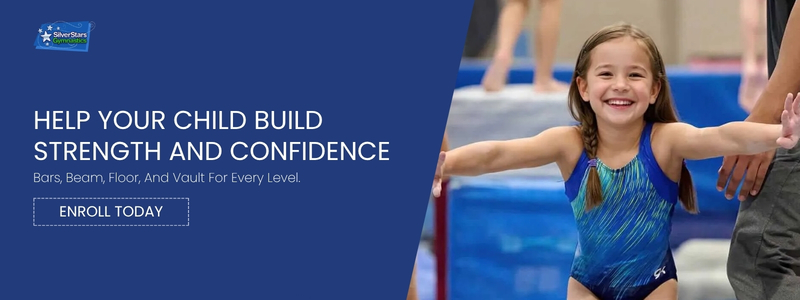
Kids between 6 and 15 have a few things working in their favor.
First, their bodies are more developed. They have the strength, coordination, and body control needed to learn gymnastics skills more quickly. They can follow instructions, understand corrections, and apply feedback from their coaches in real time.
Second, they are more emotionally ready. A 7-year-old or a 12-year-old can set goals, track their progress, and push through challenges with more patience than a preschooler. That mental toughness makes a real difference when learning new skills.
Third, they are social. Kids in this age group love being part of a team. They motivate each other, celebrate wins together, and build friendships that keep them coming back week after week.
This is one of the biggest worries parents have. And the research actually points in the opposite direction.
A 2025 study published in BMJ Open Sport and Exercise Medicine examined sports specialization in young gymnasts and found that pushing children into intensive, specialized training too early can increase the risk of overuse injuries and negative mental health effects. In other words, starting later and building skills gradually is not a disadvantage. It can actually be healthier for your child.
Kids who begin gymnastics at 6, 8, or even 12 have the benefit of a fresh start. They bring curiosity, energy, and excitement that fuel fast progress. The idea that your child has to start at age 3 to succeed is a myth. What matters far more is the quality of coaching, the right environment, and your child's willingness to learn.
Gymnastics is one of the most complete physical activities a child can do. No matter what age they start, your child will build real, lasting strength across their entire body. Core muscles, arms, and legs all get stronger with every class. That strength transfers directly to every other sport and physical activity your child tries.
Regular stretching and movement also improve flexibility, which reduces injury risk across all sports. Every gymnastics skill requires precise coordination and balance, training the brain and body to work together in ways that stick for life. Classes also build endurance and agility, keeping kids active and healthy as they grow.
These are not just gymnastics skills. They are life skills your child will carry into adulthood.
The benefits stretch far beyond getting stronger. Gymnastics teaches kids how to think through challenges and how to work with others.
Kids learn to set goals and break them down into smaller steps. They learn that falling is part of the process and that getting back up is what matters. They build confidence every time they master a new skill they thought was impossible just a few weeks earlier.
On the social side, gymnastics classes put kids alongside peers who share their interests. They learn sportsmanship, teamwork, and how to support each other. For kids who may not connect with traditional team sports, gymnastics offers a space where individual effort and group energy come together naturally.
These gains show up in the classroom, at home, and in every other part of your child's life.
Check out this guide: What Your Child Gains from Starting Now
If you have been going back and forth about what age to start gymnastics, consider this. The best time to start is whenever your child is ready and excited. For many families, that turns out to be somewhere between 6 and 15.
A good age to start gymnastics is the age your child says yes. And a program designed for their level will meet them exactly where they are, whether they are a total beginner or have some experience from another sport.
Beginner classes for ages 5 through 14 welcome kids with zero gymnastics background. The focus is on building skills safely, having fun, and helping every child progress at their own pace. The first trial class is free for new families and can be scheduled at any time. No commitment, no pressure.
Read more: How to Pick the Right Gym for a Late Starter
It is never too late for your child to discover what they are capable of. Gymnastics builds strength, confidence, discipline, and friendships that last well beyond the gym. And ages 6 through 15 are some of the best years to start.
Your child is a star. Let them shine. Join us today and find a program that fits your family.
There is no single perfect age. Many children do well starting between 5 and 10, but kids up to 15 can thrive in beginner programs. What matters most is your child's interest and willingness to try.
Kids can start at any age, from 6 months in parent-child classes to 14 in beginner school-age programs. Older beginners often progress quickly because they bring focus and body awareness that younger kids are still developing.
Not at all. Kids at 10 or 12 have the strength, coordination, and mental focus to learn gymnastics skills quickly. Many successful gymnasts started at this age or later and made excellent progress.
Actually, the opposite may be true. Research shows that early sports specialization can increase overuse injuries and negative mental health effects. Starting later and building skills gradually is often the healthier approach.
Yes. Many programs offer pathways from beginner recreational classes to invitational and competitive levels. With consistent effort and strong coaching, older beginners can absolutely work toward competition if that is their goal.
Explore a variety of fun and skill-building programs at Silver Star Gymnastics, from gymnastics and dance to camps and recreational activities designed for kids of all ages.